
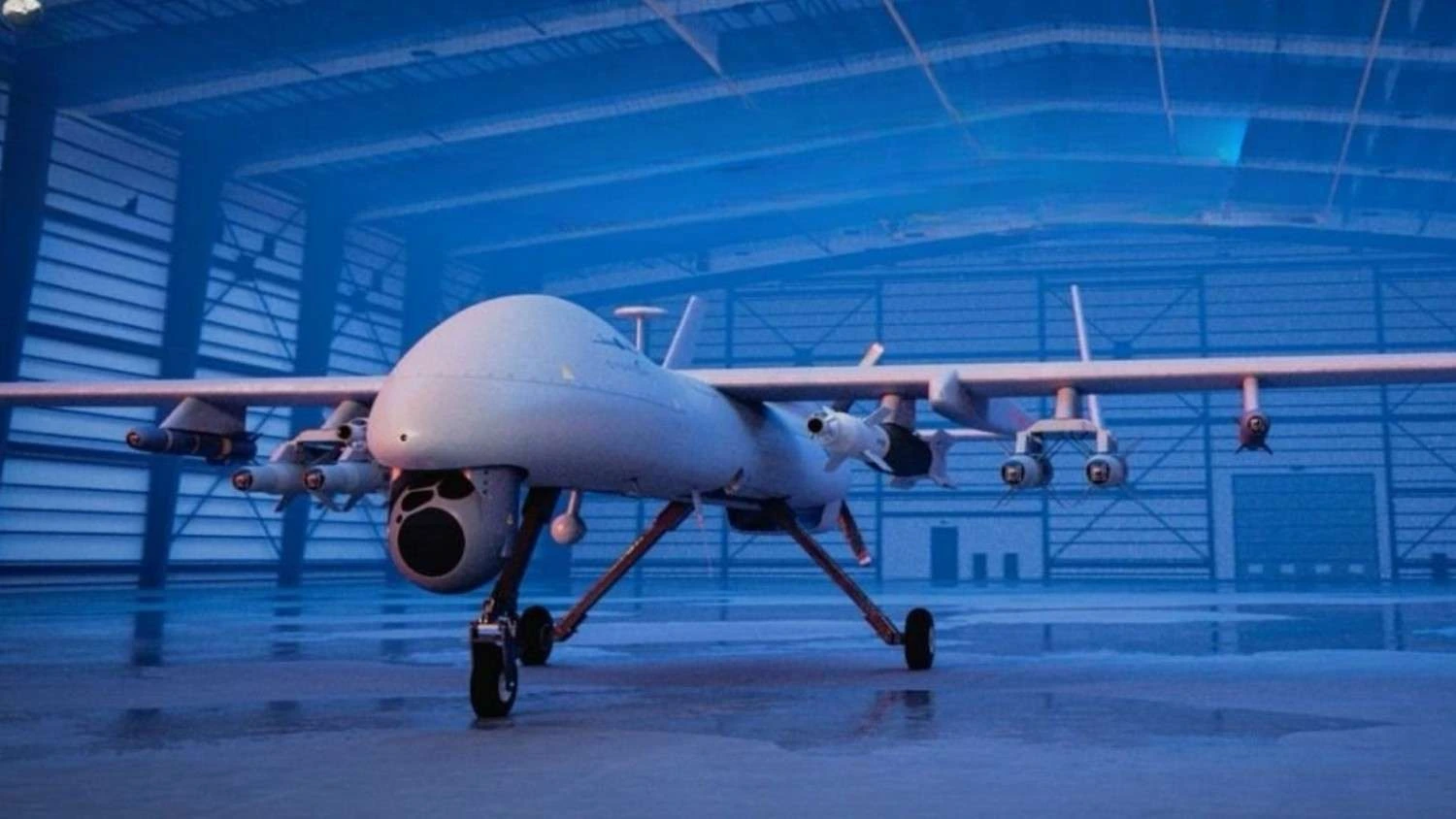
Insights into Drone Technology of Pakistan and Drones Held with Pakistan
Table of Contents
- The Rise of Drone Technology in Pakistan – Origins, Drivers & Strategic Vision
- In-Depth Analysis of Major Combat & Recon Drones Held with Pakistan
- Pakistan’s Indigenous Drone Evolution – From Surveillance to Combat
- Strategic Significance of Drones Technology of Pakistan
- Challenges, Controversies, and Ethical Implications of Drone Technology in Pakistan
The Rise of Drone Technology in Pakistan – Origins, Drivers & Strategic Vision
The journey of drones technology of Pakistan started from humble beginnings in the late 1990s to becoming a key pillar of modern warfare strategy. Over the past two decades, Pakistan’s armed forces and defense industry have steadily transitioned from importing surveillance UAVs to developing and operating combat-capable drone fleets. With threats evolving regionally, especially along the eastern and western borders, Pakistan’s military doctrine now heavily integrates UAVs for real-time surveillance, precision strikes, and strategic deterrence.
Driven by a mix of defense necessity, geopolitical alignments, and emerging indigenous capabilities, the expansion in drone technology has been one of the most transformative aspects of Pakistan’s national security strategy.
Table: Key Milestones in Pakistan’s Drone Development
| Year | Milestone | Description |
| 1998 | First Recon Drones | Introduction of Selex Galileo Falco UAVs |
| 2009 | Indigenous R&D | Initiation of Burraq armed UAV by NESCOM & AWC |
| 2015 | First Armed Use | Burraq drone used in counter-terror ops in FATA |
| 2017–2020 | CH-4/Wing Loong | Imported Chinese UCAVs for border surveillance & strikes |
| 2021–2023 | Bayraktar TB2 Acquisition | Strengthened ISR and strike ops from Turkish-origin drones |
| 2024–2025 | Shahpar III & Domestic Scaling | Long-range MALE-class Pakistani drone enters trials |
Why Pakistan Prioritized Drone Capabilities?
Counter-Terror Operations in Tribal Regions
After 2004, Pakistan faced a growing militant insurgency in FATA and Balochistan. The inability to strike surgically without ground troop casualties pushed for armed drone development, eventually culminating in Burraq, a Pakistani UCAV capable of precision strikes.
Real-World Impact: In 2015, the Burraq UCAV successfully neutralized key terrorist hideouts in the Shawal Valley, marking the first indigenous UAV strike in South Asia.
Balancing India’s Technological Edge
India’s collaboration with the U.S. and Israel on Heron and Predator drones presented a strategic imbalance. Pakistan responded by:
- Importing Wing Loong II from China
- Strengthening ties with Baykar (Turkey) for Bayraktar TB2
- Investing in Shahpar III and indigenous MALE UAVs
Surveillance over Hostile Borders
Pakistan shares 2,611 km of border with India and 2,640 km with Afghanistan. Drones provide:
- 24/7 border patrol without risking pilot lives
- Real-time data for airstrike targeting, infiltration alerts, and smuggling prevention
Local Industry Involvement in Drone Ecosystem
National Engineering & Scientific Commission (NESCOM)
Lead agency behind Burraq and surveillance platforms like Shahpar. NESCOM partners with:
- Air Weapons Complex (AWC)
- Global Industrial & Defence Solutions (GIDS)
- Pakistan Aeronautical Complex (PAC)
GIDS & PAC Kamra
These state-backed firms are responsible for:
- Composite airframe production
- Payload systems (EO/IR sensors, missiles, radars)
- Avionics and C4I integration
Expert Quote
“The rise of drones technology of Pakistan is not just a military necessity but a reflection of regional threat assessments and global defense trends.”
— Lt. Gen. (R) Syed Tariq, former Director General Military Intelligence
In-Depth Analysis of Major Combat & Recon Drones Held with Pakistan
By 2025, drones held with Pakistan represent a full-spectrum UAV force capable of ISR (Intelligence, Surveillance, Reconnaissance), strike, and target acquisition operations. The mix of imported and indigenously developed platforms ensures flexibility, cost-efficiency, and increased autonomy from foreign suppliers.
Pakistan’s Top Combat and Reconnaissance Drones in Service (2025)
| Drone Name | Origin | Type | Range | Endurance | Status |
| Burraq | Pakistan | Armed | ~1,000 km | 8 hrs | Operational |
| Shahpar II | Pakistan | Recon/Strike | 300–400 km | 14 hrs | Operational |
| Shahpar III | Pakistan | MALE Combat | 1,000+ km | 20–30 hrs | Trial/Induction |
| Bayraktar TB2 | Turkey | MALE Combat | 150 km (LOS), 300+ (SATCOM) | 27 hrs | Operational |
| CH-4B | China | MALE Combat | 2,000+ km | 30 hrs | Operational |
| Wing Loong II | China | MALE Combat | 4,000 km | 32 hrs | Operational |
| Falco UAV | Italy (ASELSAN) | ISR | 200 km | 14–16 hrs | Limited use |
| Anka-S (speculative) | Turkey | MALE Combat | 1,000+ km | 24–30 hrs | Unconfirmed procurement |
Burraq UCAV – Pakistan’s Indigenous Armed Drone
- Developed by: NESCOM & AWC
- Role: Precision strikes on militants
- Payload: Barq laser-guided missile (similar to AGM-114 Hellfire)
- Notable Ops: First used in Shawal Valley, 2015
Significance: First locally developed drone in Muslim-majority countries with verified combat success.
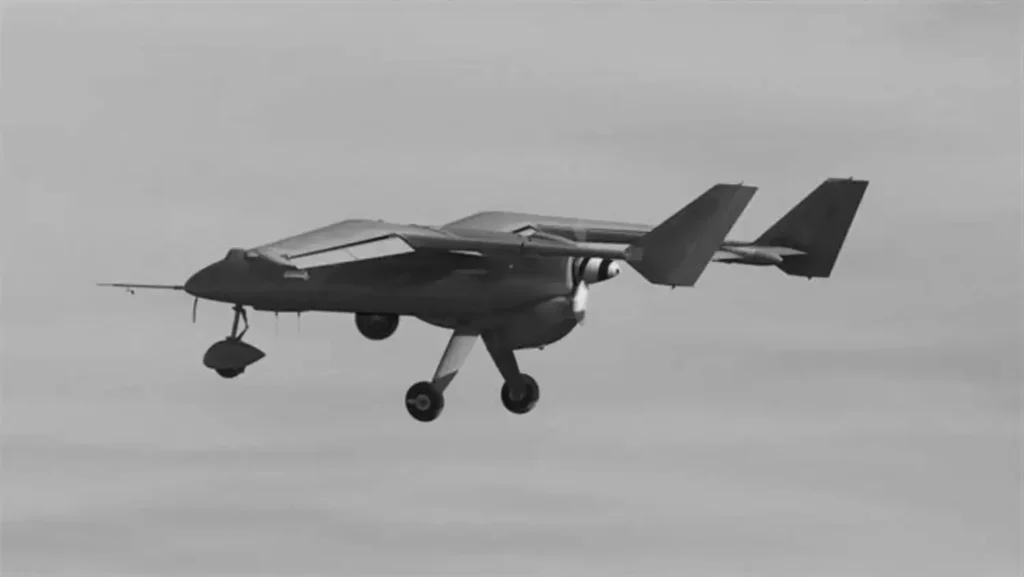
CH-4B UCAV – Chinese Backbone of Pakistan’s Strike Fleet
- Role: Surveillance & Combat
- Payload: Up to 4 guided bombs/missiles (AR-1, FT-5)
- Similar in appearance and function to the U.S. MQ-9 Reaper
- Used for: Baluchistan patrols, LoC surveillance, and border operations
Insight: Multiple CH-4s were reportedly delivered between 2016–2020 under China-Pakistan defense accords.
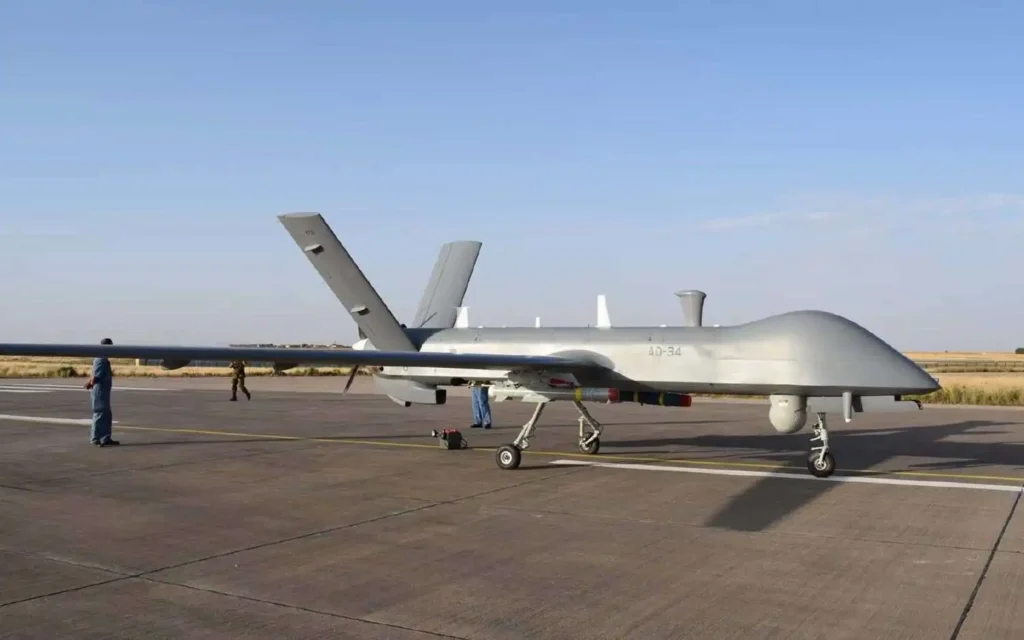
Bayraktar TB2 – The Star of Turkish Drone Diplomacy
- Proven in: Libya, Syria, Nagorno-Karabakh, and Ukraine
- Acquired by Pakistan: Reportedly inducted by 2023
- Payload: 150 kg (guided bombs, MAM-L)
- Strength: Low radar cross-section, effective for ISR and anti-armour strikes
Strategic Move: Helps Pakistan diversify away from Chinese-only drone dependency.
Shahpar II & Shahpar III – The Local Evolution
Shahpar II
- Role: ISR with light strike capability
- Indigenous development by GIDS & NESCOM
- Mid-range drone with EO/IR sensors and GPS targeting
- Exported to Nigeria (2022)
Shahpar III (2024–25)
- Role: MALE-class drone with 1,000+ km range
- Weaponized version reportedly carries PGMs and laser-guided munitions
- Still undergoing trials as of mid-2025
Impact: Shows maturity of Pakistan’s own MALE-class drone capability.
Wing Loong II – Pakistan’s Deep-Strike Option
- Acquired between 2021–2023 from China
- Can carry 12 air-to-surface weapons
- Satellite-controlled with real-time strike capability over Indian Ocean and LoC
- Seen deployed near Tharparkar sector (Sindh)
Falco UAV – The Training & ISR Pioneer
- Origin: Italian/ASELSAN (customized version)
- Role: Day/night surveillance
- Use: Anti-insurgency ops in FATA, training of drone pilots
Status: Phased out from frontline ops, still in limited ISR and training missions
Pakistan’s Indigenous Drone Evolution – From Surveillance to Combat
Pakistan’s journey in developing indigenous drone technology reflects its broader ambition of self-reliance in defense, especially in UAV (Unmanned Aerial Vehicle) systems. As external supply chains faced political and military constraints, Pakistan invested in local drone manufacturing through public-private partnerships, with NESCOM, GIDS, SUPARCO, and PAC Kamra at the forefront. These efforts have resulted in the creation of several notable UAV systems tailored to surveillance, combat, and tactical ISR (Intelligence, Surveillance, Reconnaissance).
Let’s explore the core indigenous drones of Pakistan, their specs, development history, and strategic value.
Burraq UCAV – Pakistan’s First Indigenous Combat Drone
| Feature | Specification |
| Role | Combat and Surveillance UCAV |
| First Unveiled | 2015 |
| Developer | NESCOM + Pakistan Air Force |
| Engine Type | Propeller-driven, piston engine |
| Max Altitude | ~25,000 feet (estimated) |
| Endurance | ~12 hours |
| Payload | Laser-guided Barq missile, Electro-optical turret |
| Operational Use | Confirmed strikes in tribal areas (2015–2017) |
| Control Range | ~200–250 km |
| GPS/Targeting | Advanced targeting pod, day/night EO/IR sensors |
Summary:
- Burraq was a milestone – the first domestically developed combat drone capable of delivering precision-guided munitions.
- Modeled loosely after China’s CH-3A, but heavily modified.
- Used in FATA operations post-Zarb-e-Azb with laser-guided Barq missiles.
- Gave Pakistan autonomy in counterterrorism strikes, especially after restrictions on U.S. drone support.
Shahpar Series – Tactical Surveillance Backbone
| Variant | Shahpar-I | Shahpar-II | Shahpar-III (Expected) |
| Developer | GIDS / NESCOM | GIDS | GIDS (R&D Phase) |
| Role | Tactical ISR | Medium-range Surveillance | MALE-class Combat/ISR |
| Endurance | ~7 hours | ~14–16 hours | 30+ hours (planned) |
| Payload | EO/IR, cameras | EO/IR, synthetic aperture radar | Missiles, radars, EO/IR suite |
| Engine | Piston engine | Improved internal combustion | Possibly turbocharged or hybrid |
| Navigation | GNSS/INS | GNSS/INS | GNSS, AI-aided nav |
| Wingspan | ~6.5 meters | ~9–10 meters | ~15–20 meters (projected) |
Summary:
- Shahpar-I began as a surveillance platform with real-time video and target tracking.
- Shahpar-II doubled endurance and added radar imaging capabilities.
- Shahpar-III (in prototype/R&D) aims to be a full MALE drone with combat capabilities, rivaling Turkey’s TB2 and China’s CH-4.
- These UAVs operate from PAF Mianwali, Rawalpindi UAV centers, and other strategic airstrips.
Uqaab & Jasoos Series – Foundational UAV Platforms
Uqaab UAV
- Developed by Air Weapons Complex (AWC).
- Used for training and basic reconnaissance.
- Range: ~150 km, endurance: ~6 hours.
- Early step in UAV control software and telemetry development.
Jasoos II & Jasoos II-R
- Deployed by Pakistan Army for border monitoring.
- Capable of real-time video feed.
- Ground-launched and parachute-recovered.
- Served as a model to transition from tactical to strategic ISR platforms.
Baaz UAV – Naval Surveillance Innovation
- Developed by Pakistan Navy and SUPARCO.
- Used for coastal surveillance, anti-smuggling, and reconnaissance in Arabian Sea.
- Compact design, hand-launched.
- Plays a pivotal role in maritime domain awareness, especially near Gwadar Port and sensitive naval assets.
Drone Programs Summary Table
| Drone System | Role | Developed By | Endurance | Operational Status | Special Feature |
| Burraq | Combat/Surveillance | NESCOM + PAF | ~12 hrs | Operational | Barq missile, combat proven |
| Shahpar-I | Tactical ISR | GIDS | ~7 hrs | Operational | EO/IR camera |
| Shahpar-II | Strategic ISR | GIDS | ~14–16 hrs | Operational | Radar, EO/IR |
| Shahpar-III | Combat/ISR (MALE) | GIDS | 30+ hrs | In R&D | Expected missile strike capability |
| Uqaab | Recon/Training | AWC | ~6 hrs | Limited use | Early indigenous R&D base |
| Jasoos II | Tactical ISR | Army (local labs) | ~3–5 hrs | Operational | Short-range surveillance |
| Baaz | Naval ISR | SUPARCO/Pak Navy | ~2 hrs | Operational | Hand-launched, coastal surveillance |
Real-World Impact of Domestic Drones
- Autonomy: Pakistan reduced dependence on foreign suppliers for ISR capabilities.
- Precision: Burraq strikes proved precision attack capability, even in rugged terrains.
- Cost-Efficiency: Domestic systems are far cheaper than importing Predator or Heron drones.
- Geopolitical leverage: Helped maintain operational secrecy and strategic independence during internal operations (e.g., in KP and Balochistan).
Expert Commentary
“Pakistan’s homegrown drones like Burraq and Shahpar-II are excellent examples of how middle-power nations can enter the elite UAV club through reverse-engineering and indigenization.”
— Dr. Asim Qureshi, Defense Analyst, Islamabad
Strategic Significance of Drones Technology of Pakistan
As drone warfare and surveillance continue to redefine modern military doctrines, the strategic value of drones technology of Pakistan has become central to its defense posture. In this section, we’ll analyze how Pakistan integrates drones into its strategic, geopolitical, and tactical frameworks, and how this unmanned evolution is shaping South Asia’s security landscape.
Force Multiplier in Asymmetric Warfare
Pakistan’s doctrine emphasizes asymmetric deterrence, particularly against a conventionally superior adversary like India. Drones offer a cost-effective force multiplier, providing capabilities that once required manned aircraft or satellite coverage.
- Persistent ISR (Intelligence, Surveillance, Reconnaissance) using Shahpar and Falco drones allows round-the-clock monitoring of borders, Line of Control (LoC), and terrorist hideouts.
- In the 2020s, drones were pivotal in counter-insurgency (COIN) operations in former FATA regions and Balochistan. Small UCAVs like the Burraq provided rapid strike capability against high-value targets (HVTs) without risking pilots.
- Tactical UAVs like UQAB and Anza surveillance platforms are deployed with Pakistan Army infantry brigades during real-time field operations.
“Drones give Pakistan the ability to watch, wait, and strike – all while remaining politically and militarily deniable.”
— South Asia Defense Analyst, 2023
Strategic Depth and Surveillance Against India
Surveillance of Forward Areas
The drones held with Pakistan are deployed extensively across:
- Eastern Border (India): Including Sialkot, Lahore, and Sindh sectors
- LoC Hotspots: Neelum, Bhimber, and Rawalakot for terrain mapping and infiltration detection
Pakistan utilizes Shahpar II and Wing Loong II drones for high-altitude surveillance up to 20,000 feet, ideal for LoC and desert regions of Cholistan and Tharparkar.
Countering Indian Drone Incursions
Since 2021, Indian drones have violated Pakistani airspace multiple times. Pakistan responded with:
- Upgraded radar and anti-drone systems (e.g., DroneDefender, Anti-UAV Jammer Guns)
- Electronic Warfare units in Sialkot and Bahawalpur Corps zones
- Use of Burraq and Shahpar for area denial operations
Drone vs. Drone Standoff Example
| Year | Incident | Pakistani Response |
| 2022 | Indian quadcopter shot down in Rakhchikri sector | Burraq surveillance deployed for 48 hrs post-incident |
| 2024 | Suspected Indian UAV over Bahawalpur sector | Electronic jamming triggered by PAF EW units |
| 2025 | Surveillance drone near Karachi detected | PAC radar drone triangulated signal, Shahpar scrambled |
Strategic Alliances and Technology Transfer
Pakistan’s drone strength also stems from its multi-vector alliances:
China – The Primary Partner
- CH-4 and Wing Loong II UCAVs supplied by CASC and AVIC
- Joint programs: Maintenance, spare parts, training, software support
- Rumored co-development of CH-5 or Wing Loong III variants
Turkey – Tactical UCAV Cooperation
- Bayraktar TB2 drones have been acquired in limited numbers
- Ongoing discussions to co-produce TB3 in Pakistan with private sector involvement (Karachi Aerospace Complex)
- Potential use of Kargu loitering munitions in border security
Other Partners
- Italy (SELEX): For Falco drone upgrades
- South Africa & UAE: Exploring sensor suite integration and drone EW payloads
Strategic Deterrence Through Armed Drones
Armed drones like Burraq, CH-4, and Wing Loong II now constitute Pakistan’s remote deterrence capability, especially in tactical-level engagements.
- Burraq (Laser-guided Barq missile) can neutralize militant vehicles, hideouts, or enemy forward command posts.
- CH-4 and Wing Loong II have precision-strike range of over 2500–3000 km when paired with AR-1 and FT-9 guided munitions, a major psychological and operational deterrent.
“Drones add a third arm to our conventional and nuclear doctrines; a flexible, precise, rapid-response wing that buys time and options.”
— Former PAF AVM (Retd), Defense Expo, 2024
Drone Integration in Strategic Command Network
Pakistan is now integrating drones into its centralized command-and-control (C2) network via:
- Real-time telemetry and EO/IR feeds connected to Corps HQs
- Inter-service drone integration between Air Force (PAF), Army Aviation, and Navy (PN)
- Use of AI-driven analytics for target recognition, loitering behavior, and kill-chain automation
PAF’s Airpower Centre of Excellence (ACE) has initiated tactical drone doctrine courses for:
- ISR pattern recognition
- Air-denial simulations
- Urban drone warfare planning
Border Control, Anti-Terror Ops & Internal Security
In addition to external defense, drones held with Pakistan play a critical role in internal security:
- Shahpar and Uqab drones used by Frontier Corps (FC) in KP and Balochistan
- Rangers in Sindh and Punjab use quadcopters to monitor protest sites, pipelines, and ports
- Nadra and MoI deployed drones for flood relief operations and population monitoring in 2022 and 2023
The strategic significance of drones technology of Pakistan lies not just in military might but in operational flexibility, geopolitical signaling, and internal security management. Drones today form the third pillar of Pakistan’s evolving strategic framework, shaping its doctrine, diplomacy, and deterrence posture across land, sea, and sky.
Challenges, Controversies, and Ethical Implications of Drone Technology in Pakistan
The rise of drone warfare and surveillance capabilities in Pakistan, while tactically and strategically important, has also sparked major controversies, operational limitations, and ethical debates. This section explores the multifaceted challenges faced by the country in developing and deploying Drones Technology of Pakistan including domestic constraints, geopolitical concerns, international scrutiny, and public perception.
Technical and Operational Challenges
Despite progress in UAV design and manufacturing, Pakistan faces several persistent hurdles in drone deployment and sustainability:
| Challenge | Details |
| Sensor & Avionics Limitations | Locally produced drones like Shahpar and Burraq often rely on imported sensors and imaging systems due to lack of indigenous alternatives. |
| Autonomy Constraints | True autonomous decision-making (AI-based targeting, obstacle avoidance, adaptive route mapping) remains underdeveloped in most UAV platforms. |
| Limited Satellite Integration | Pakistan lacks its own robust GPS or satellite navigation system, relying on external providers, which can be jammed or denied during conflict. |
| Maintenance Bottlenecks | Sustaining a fleet of UAVs is expensive; lack of local spare parts and servicing infrastructure leads to longer downtimes. |
| Weather & Terrain Sensitivity | UAVs like Wing Loong II and CH-4 perform poorly in high-altitude cold zones or during monsoon conditions. |
Strategic and Security Concerns
Civilian Drone Regulation
As civilian drones proliferate (especially DJI consumer drones), there are concerns about:
- Airspace violations near sensitive military installations
- Lack of registration systems
- Unregulated commercial use in media, weddings, real estate, and protests
Though Pakistan’s Civil Aviation Authority (CAA) has introduced drone guidelines, enforcement remains patchy. Unauthorized drone use around military areas is considered a national security threat.
Regional Espionage and Drone Warfare
India, China, and Pakistan all maintain active drone surveillance over the Line of Control (LoC) and international borders.
Examples:
- India frequently shoots down Pakistani quadcopters allegedly conducting ISR missions across the LoC.
- Pakistan uses drones in border monitoring and counter-infiltration roles in Azad Kashmir and Balochistan.
Such incidents risk escalating bilateral tensions, especially if a strike UAV were to cross the border, even accidentally.
Drone Strikes and Humanitarian Controversies
While most drone strikes in Pakistan’s tribal areas (2004–2018) were conducted by the United States using MQ-1 Predator and MQ-9 Reaper drones, the legacy of these operations continues to shape national debates.
Key Data from Bureau of Investigative Journalism (UK):
- Total U.S. drone strikes in Pakistan: Over 400
- Estimated deaths: Between 2,500 and 4,000
- Civilian casualties: Estimated between 400–1,000, including children
These strikes sparked:
- Mass protests across Khyber Pakhtunkhwa and FATA
- Public distrust in government’s transparency
- Criticism from international human rights bodies
Although Pakistan’s own UCAVs (e.g., Burraq) have reportedly been used in domestic counter-terrorism, there are no confirmed public records of their use in populated zones, likely to avoid the PR disaster the U.S. faced.
Legal and Ethical Dilemmas
| Issue | Ethical Question |
| Autonomous Lethal Drones | Should AI be allowed to make kill decisions without human oversight? |
| Targeted Killings | Are drone strikes outside formal war zones (like tribal areas) legal under international law? |
| Civil Liberties vs. Security | Where should the line be drawn between surveillance for safety and violation of privacy rights? |
| Use in Protests or Dissent | Could drones be misused to monitor or intimidate protestors, journalists, or activists? |
| Export Control | Should Pakistan export drones to regimes with questionable human rights records (e.g., Libya, Sudan)? |
Several Pakistani think tanks (e.g., ISSI, PIPS) and legal scholars have advocated for:
- A national drone policy
- Public oversight mechanisms
- Drone warfare doctrine in line with international humanitarian law
International Scrutiny and Arms Control
Pakistan’s UAV purchases from China and potential exports to Africa and the Middle East raise compliance questions under the Missile Technology Control Regime (MTCR) and Wassenaar Arrangement, though Pakistan is not a member of either.
Western analysts and Indian defense experts often accuse Pakistan of:
- Proliferating combat drone tech
- Lack of transparency
- Bypassing arms embargoes via Chinese suppliers
Pakistan, in response, asserts its right to self-defense and argues its drone exports (mainly surveillance drones like Shahpar I) are non-lethal platforms and in line with sovereign rights.
Religious and Cultural Sensitivities
- Drones flying over religious gatherings or private homes have sparked cultural backlash.
- In tribal Pashtun culture, aerial surveillance is seen as dishonorable or intrusive, leading to drone destruction by locals.
Pakistan’s military has since restricted drone overflights near religious processions and consulted tribal elders during sensitive operations.
While Drones Technology of Pakistan represents a powerful tool in modernizing national defense and ISR capabilities, it also exposes Pakistan to a complex web of technical, legal, social, and diplomatic challenges. How Pakistan balances innovation with responsibility will define the future trajectory of its drone doctrine.


